
Google began rolling out the November 2026 core update on Tuesday, November 10, at 10:06 a.m. PT. The update applies globally and to all languages, and the rollout may take up to two weeks to complete.
- Google began this core update on Nov. 10 at 10:06 a.m. PT, applying to all languages worldwide.
- The rollout can last as long as two weeks, ending around Nov. 24 and just before Thanksgiving and Black Friday.
- It is the third core update of 2026 and the eighth ranking update on the Search Status Dashboard this year.
- Google says to wait for the rollout to finish, then wait a full week before comparing Search Console data against the week before Nov. 10.
- Google's notice names no targets, ranking systems or content types, and no Search Central blog post accompanied it.
Google began the November 2026 core update on November 10
The rollout started on November 10, 2026, at 10:06 a.m. PT, according to the Google Search Status Dashboard. Google announced the update at about 1:07 p.m. ET the same Tuesday.
Reports give the time in different zones. One version cites 1:07 p.m. ET, another a release line stamped 10:07 PST. Both describe the same moment.
The Dashboard entry reads: "Released the November 2026 core update, which applies globally and to all languages. The rollout may take up to 2 weeks to complete."
Google's Search Central account also posted on LinkedIn. The post said: "Today we released the November 2026 core update to Google Search. This is a regular update designed to better surface relevant, satisfying content for searchers from all types of sites."
By Google's count, this is the third Search core update of 2026. It is also the first core update confirmed on the Dashboard since the May 2026 core update, which ends a gap of more than five months, and Google gave no advance notice before the start date. On the Search Status Dashboard it is the eighth ranking update listed so far this year.
What Google has not said about the update
Google's notice names no specific objectives, ranking systems, content types, query categories or markets. The only description is the general one in the LinkedIn post: surfacing relevant, satisfying content from all types of sites.
At the time of publication, the Search Central blog had no post about the update. So far, the only official statements are the Dashboard entry and the social post.
Search Engine Roundtable describes the release as a broad core update. In its reading, the update is not a penalty and instead promotes or rewards great web pages. That is the outlet's characterization. Google's notice does not use that wording.
For site owners, the missing detail means no official guidance yet on which kinds of pages might gain or lose. Any claim about specific winners or losers at this stage is interpretation of early data, not something Google has confirmed.
How a core update works and how the rollout is tracked
A core update is a broad change to Google's Search algorithms and systems. Google makes them several times a year, and according to Google they do not target specific sites or individual web pages.
Google says that as content on the web changes, it assesses and updates its systems to keep pace. That is why the changes touch Search results broadly rather than a single category of site.
The rollout is not instant. Google's John Mueller said in March that core updates sometimes have to be applied step by step rather than all at once. That helps explain why Google gives a window of up to two weeks and not a single switch-over moment.
The Search Status Dashboard
The Search Status Dashboard is the Google page used to log ranking updates and service problems in Search. The start of this update was recorded there, and the Dashboard's tally is the source of the "eighth ranking update this year" count.
Volatility trackers
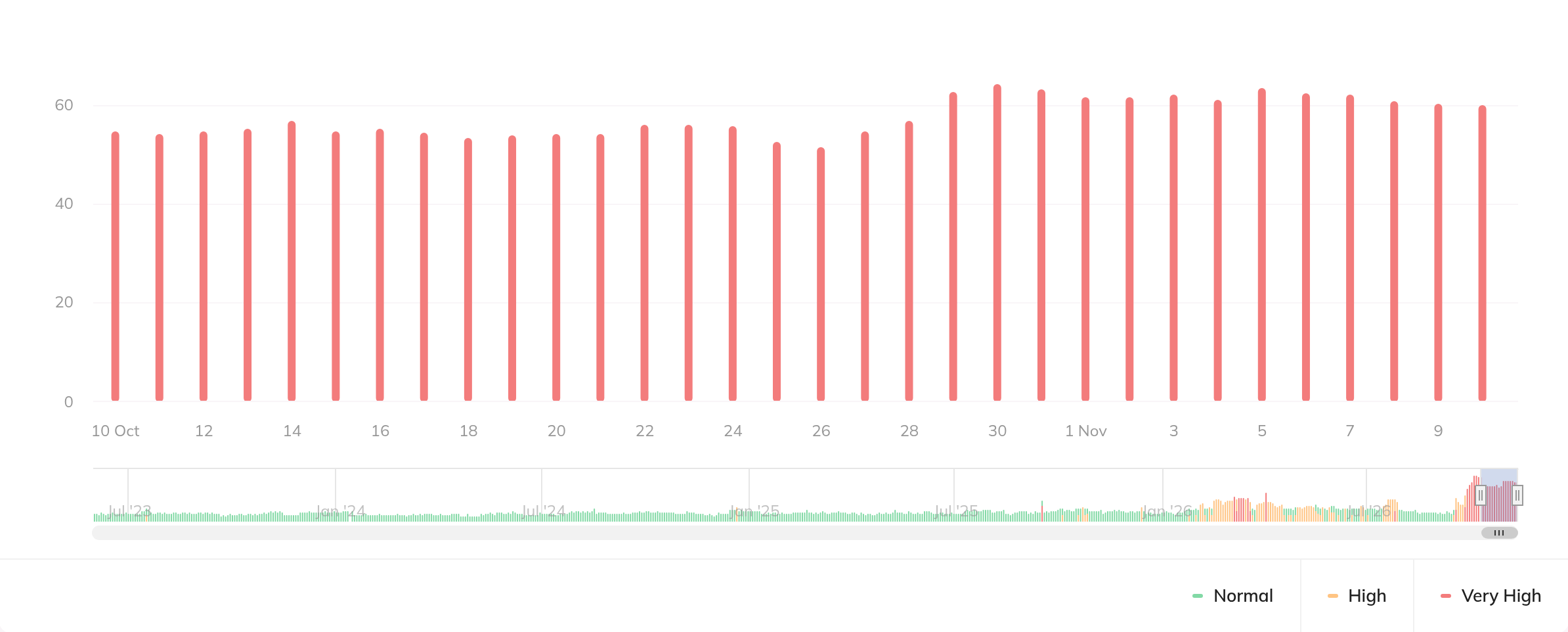
Volatility trackers are tools that measure how much Search rankings change over time. Search Engine Roundtable was reviewing early tracking data from many such tools, including Semrush, Sistrix, AccuRanker and Mozcast. No conclusions from that data are part of Google's announcement.
Smaller unannounced core updates
Not every change to the core systems gets a Dashboard entry. Google also ships smaller, unannounced core updates during the year, so rankings can move between named releases without any notice. Search Engine Land and other outlets point to this when sites report swings in weeks with no confirmed update. For you, it means a spike on a volatility tracker does not prove that a named update is at work. Some of what those tools record is routine movement from these quieter changes, and some is plain noise. That is why we suggest reading tracker data as a hint, then checking it against the Dashboard and your own Search Console figures before drawing conclusions about this rollout.
Timeline - the rollout may end around November 24, ahead of the holiday shopping period
If the rollout uses its full two-week window, it would finish around November 24. Google has said the update could last that long, so an earlier finish is possible within the stated window.
The timing is tight. The window ends close to the busiest shopping days of the year, and Google points to Thanksgiving on November 26, Black Friday on November 27 and Cyber Monday on November 30. Rankings may therefore still be settling just before those dates for sites that depend on seasonal traffic.
Google will update its ranking release history page once the rollout is complete. That page is the signal that the update has finished and that the waiting period for analysis can begin.
What site owners should do and when to check data
Google recommends waiting until the rollout is complete before checking Search Console data. Numbers pulled mid-rollout can reflect a partly applied change.
After completion, Google advises waiting at least a full week. The data from that week should then be compared with a baseline week from before the update started. For this update, the suggested baseline is the week prior to November 10.
In practice, that means a comparison is not meaningful until the release history page shows completion, plus seven more days. If the rollout ends around November 24, the earliest sensible comparison would come in early December.
Google's core update documentation also says improvements after a decline can take days or months to show and are not guaranteed. Neither a drop nor a gain in the first days settles anything.
On recovery, Google has offered no specific actions for sites that lose visibility in a core update. Its general advice stays the same: focus on helpful, reliable content rather than quick technical fixes. Numinix cites Google's Gary Illyes, who said in October that recovery after a core update decline is usually slow, so it makes sense to plan for months rather than days.
Agencies and teams that report on several sites can note the November 10 start date and the baseline week in their reporting now, so the later comparison uses the same period for every site.
How this rollout compares with earlier 2026 updates
The two earlier core updates this year each took a little under two weeks. The figures below are the durations Google logged, shown in the Dashboard's days-and-hours format. In weeks, the March and May core updates each ran about one and three quarter weeks, the June and August spam updates well under half a week, and the September spam update just under two weeks.
| Update | Dates | Duration |
|---|---|---|
| March 2026 core update | Mar. 27 to Apr. 8 | 12 days 4 hours |
| May 2026 core update | May 21 to June 2 | 11 days 21 hours |
| June 2026 spam update | June 24 to 26 | 2 days 1 hour |
| August 2026 spam update | Aug. 18 to 21 | 2 days 16 hours |
| September 2026 spam update | Sept. 24 to Oct. 8 | 13 days 16 hours |
The fourth spam update of 2026 began on September 24 with a two-week window, the longest for a spam update to that point. Spam updates in June and August finished in under three days.
Two other 2026 entries are not in the table. Google logged a February 2026 Discover update, a core-type update it labeled as applying to Discover only, and a March 2026 spam update. With those two and the November release, the Dashboard's list of 2026 ranking updates comes to eight.
Judging by the March and May runs, a finish within roughly 12 days of the November 10 start would fit the pattern, though Google has given only the up-to-two-weeks window.
Past core updates from 2024 to 2025 ran from days to weeks
Earlier core updates varied widely in length, from under a week to more than six weeks.
- December 2025: December 11 to December 29, 18 days
- June 2025: June 30 to July 17
- March 2025: March 13 to March 27
- December 2024: December 12 to December 18
- November 2024: November 11 to December 5
- August 2024: August 15 to September 3
- March 2024: March 5 to April 19
Running from March 5 to April 19, the March 2024 update was the longest on this list. The shortest was the December 2024 update, finishing in six days.
The number of confirmed updates has also fallen. SEO consultant Gagan Ghotra counted confirmed updates dropping from 10 a year in 2021 and 2022 to four in 2025.
What the March update and recent volatility showed
SE Ranking data showed that in March 2026, most top-three URLs changed position. After the December 2025 update the share was noticeably lower.
Far more top-ten pages fell out of the top 100 in March than in December. In an analysis of Sistrix data, Aleyda Solis found that aggregators, directories and comparison sites took the heaviest losses after the March update.
Volatility was also reported outside core update windows. In October, DemandSphere said Google was returning spurious results on a share of its daily rank checks. Nozzle also counted a portion of results pages as poisoned.
Those readings matter for measurement. Rank-tracking data from late October may already contain noise, which complicates before-and-after comparisons against the November baseline.
Sources
Photo by Search Engine Journal
Frequently asked questions
When did the November 2026 core update start?
When did the November 2026 core update start?
It began on Tuesday, November 10, 2026, at 10:06 a.m. PT, about 1:07 p.m. ET, according to the Search Status Dashboard.
How long will the November 2026 core update take?
How long will the November 2026 core update take?
Google says the rollout may take up to two weeks, which would end around November 24.
Is the November 2026 core update a penalty?
Is the November 2026 core update a penalty?
Google describes it as a regular update to better surface relevant, satisfying content from all types of sites. Search Engine Roundtable characterizes it as a broad core update that is not a penalty.
When should I check Search Console after the update?
When should I check Search Console after the update?
Wait until the rollout is complete, then wait at least one more full week. Compare that week with the week before November 10.
How many core updates has Google released in 2026?
How many core updates has Google released in 2026?
This is the third Search core update of 2026, after those in March and May.
How long did the May 2026 core update take?
How long did the May 2026 core update take?
It ran from May 21 to June 2, 2026, taking 11 days and 21 hours.