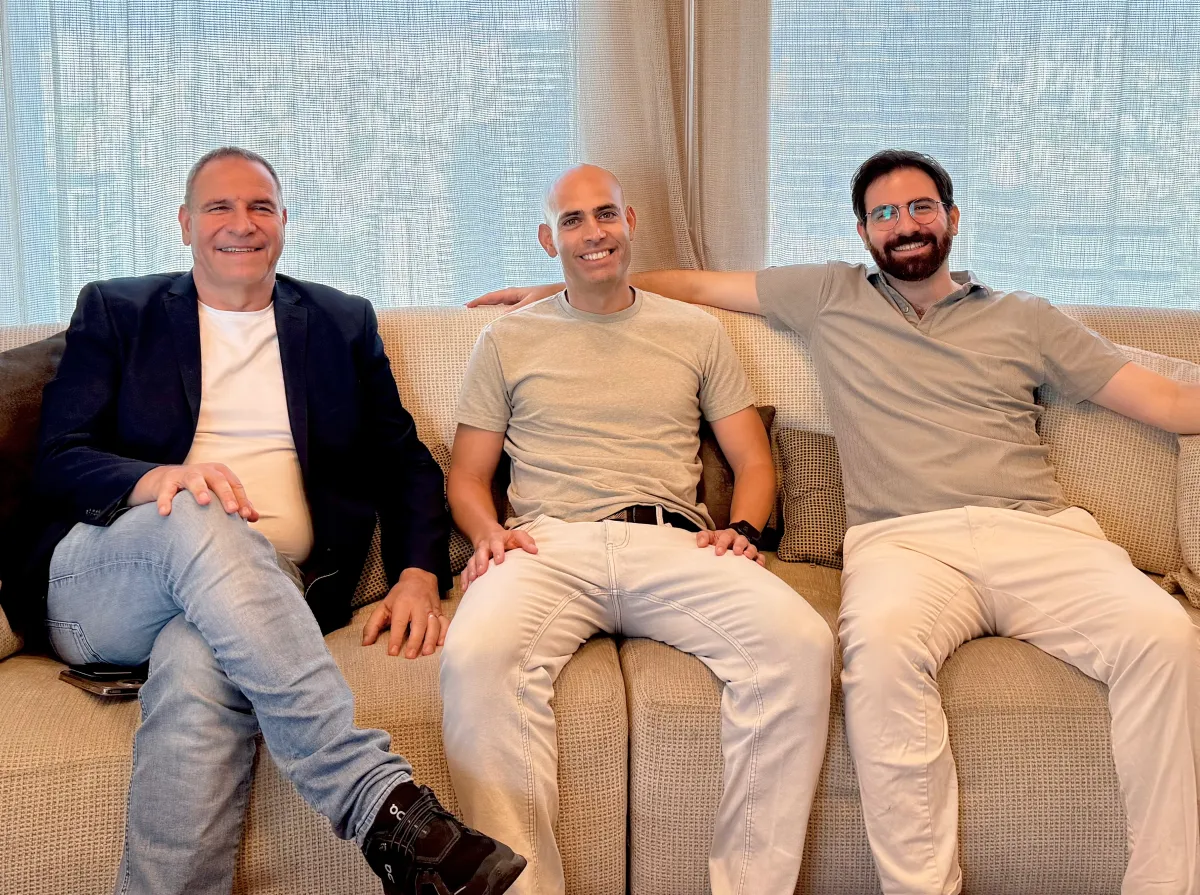
Israeli startup 42AI has come out of stealth with $62.5 million in seed funding, TechCrunch reports, for a “behavioral world model” that it says predicts the probability of a person making a given decision. The system is already running at financial brokerages, where it is used to anticipate how individual traders react to volatile markets. The company’s claims about accuracy, funding and privacy carry caveats that matter for anyone judging the technology.
- 42AI emerged from stealth with $62.5 million in seed funding, per TechCrunch.
- Its model predicts the probability of a person’s decisions.
- The system runs at 10 large brokerages to manage liquidity, margin requirements and hedging exposure.
- The 98% accuracy claim reported by TechCrunch measures whether trading flows land inside an expected band rather than whether each trade is predicted correctly; the F1 score, a stricter measure, is 0.8 to 0.85.
- The seed money came from the founders and Infinity Group, founded by the CEO’s father.
- Privacy and misuse concerns remain. The model builds individual behavioral profiles, and a founder called the worry about brokerages using predictions against customers “a valid concern”.
42AI comes out of stealth with a $62.5 million seed round
42AI is an Israeli startup that has now left stealth mode with a $62.5 million seed round, according to TechCrunch. The company says it is building a “behavioral world model”, a system meant to estimate the probability that a person will make a certain decision.

The first deployment is in finance. According to TechCrunch, the company is running its predictive system at a handful of financial brokerages, where it aims to predict how individual traders respond to volatile conditions.
42AI’s Amit Gal-Or, the CEO and co-founder, and CTO and co-founder Ehud Ezra gave the details to TechCrunch. Most figures reported below, including those on accuracy, customers and revenue, are the founders’ own statements as reported there, and no independent verification is cited.
The round is described as a seed, the earliest formal funding stage, yet it is large for that label. Later sections cover where the money came from, which is a notable part of the story.
How the behavioral world model works
The approach, which 42AI also presents under the name Large Behavioral Models, differs from simple pattern extrapolation. Instead of projecting forward from what a person did before, the model tries to infer the internal motivations behind actions.
Inferring motivation from unrelated events
To get at those motivations, the system examines how people react to events that seem unrelated to one another. The examples given are KYC, onboarding, support calls, money transfers and trading. KYC stands for know-your-customer checks, the identity verification a customer completes when signing up with a financial firm.
The idea is that a person’s reaction to a support call or a transfer reveals something about tendencies that also shape how that person trades.
From trait representations to explained predictions
The company converts these observations into mathematical representations of traits. Those representations feed a transformer-based world model, which lays out probabilities for decisions under different circumstances. A transformer is a type of neural network architecture; the report describes it only as the basis of the world model.
A separate language model generates explanations for the predictions, so the output is not just a probability but also a stated rationale. Machine-written rationales like these raise questions about identifying AI-generated text, which is why some providers now use measures such as Anthropic’s watermarking of Claude output.
The model is also trained to preserve a person’s underlying tendencies during simulations. In practice, that means that when the system runs “what if” scenarios, the simulated person is meant to keep their underlying tendencies rather than being reset to generic behavior.
The model builds on broader machine learning concepts. Neural networks were first proposed in 1943 by Warren McCulloch and Walter Pitts, according to Yahoo Finance, and deep learning is a branch of machine learning that uses multi-layer artificial neural networks.
Training data and three years of research
Three years of development went into the approach, according to 42AI. The work combines psychological research with neuroscience and genetics. The company also took advice from experts in psychology and PTSD, and from Dan Shechtman, the 2011 Nobel Prize in Chemistry winner.
Its data came in stages. First, the team studied thousands of people through psychological assessments and behavioral scenarios. It then added government and biobank datasets covering more than 2 million people, as TechCrunch reports.
Customer data has since expanded the picture. Gal-Or told TechCrunch that customer datasets now cover almost 30 million people.
The progression shows how the company moved from small, controlled studies toward large population datasets, and then to live customer activity. The report does not say how the different sources are weighted, how consent was handled for the government and biobank data, or whether any of the research has been published for outside review. Those points are not known from the available reporting.
Accuracy claims and what the numbers measure
The headline figure is 98% accuracy on market trades, as Gal-Or told TechCrunch. He said this number measures whether trading flows fall within a forecast band, rather than whether each individual trade was predicted correctly. The distinction is significant, because a model can forecast aggregate flows well while missing many single decisions.
The company also gives an F1 score. An F1 score measures how well a classification model balances correct predictions against false alarms and missed events. A score of 1.0 would be perfect, and lower values reflect more errors of either kind.
42AI says its model consistently achieves an F1 score of 0.8 to 0.85 for predicting trading direction and volume.
| Metric | Reported value | What it measures |
|---|---|---|
| Accuracy | 98% (per TechCrunch) | Whether aggregate trading flows land inside an expected band |
| F1 score | 0.8 to 0.85 | Predicting trading direction and volume |
The F1 range is the more conservative figure for judging per-decision prediction, while the headline accuracy figure describes range-level results. Both are company-reported.
Brokerage customers, pricing and revenue
Ten large brokerages work with 42AI. They use the system to manage liquidity, margin requirements and hedging exposure, the three areas where knowing how clients will behave in volatile markets has direct financial consequences.
Gal-Or told TechCrunch that one brokerage generated approximately $30 million in additional value through dynamic hedging. The report presents this as his claim, and the brokerage is not named.
The pricing model ties into that kind of result. Customers pay either a flat fee or a percentage of the value the platform helps them gain.
42AI is generating more than “seven figures” in revenue, though Gal-Or would not specify a number. The phrase sets only a lower bound, and the actual figure is unknown.
The value-based fee option aligns the vendor’s income with customer outcomes, but it also depends on how “value gained” is calculated, a detail left out of the coverage.
Company base and public appearances
42AI is based in Tel Aviv and, according to coverage of the company, is registered in Delaware, a common setup for Israeli startups that sell into the US market. The team is described as small. The company has also built a public presence around the launch. Its founders gave a talk at the New York Stock Exchange, and the company appears in event listings for FinTech Junction 2026. These appearances are company-reported activity drawn from its own listings and coverage, not independent reporting, so they show where 42AI is presenting itself to the financial industry rather than how well its technology performs.
Who funded the round and the Infinity Group link
The 42AI seed funding did not come entirely from external investors. It came from the founders and Infinity Equity Group, usually shortened to Infinity Group, contributed over three years.
Infinity was founded by Gal-Or’s father, Amir Gal-Or, who is also 42AI’s chairman and a co-founder. The CEO’s family is therefore connected to the main source of the funding.
That affects how the round should be read. A seed of this size often signals confidence from outside venture investors; here, the money reflects insider commitment built up across the development period, and it is not a price set by new investors in a single competitive round.
Reports also differ on the funding timeline. One account of the company’s funding history describes an earlier, smaller seed round completed before this announcement and puts the total slightly above the announced figure. The figure in the headline is the company’s own claim as reported by TechCrunch, and the available coverage does not reconcile the two versions.
42AI plans to raise more money. A future round would involve outside investors and could give a clearer outside valuation signal, though no timing or target amount is given.
Limits, privacy and the risk of misuse
The founders acknowledge several limits. Ezra said the model must be trained on rules and context for each new domain, so moving beyond brokerage trading requires fresh work rather than a simple switch.
Gal-Or said there is a natural ceiling on performance because the system lacks access to everything a person experiences. Ezra added that it struggles when it lacks context, such as advice from friends that might change a decision.
Privacy questions
Gal-Or said the model does not need personally identifiable information. TechCrunch noted, however, that it still creates individual behavioral profiles from linked customer activity. Removing names does not remove the profile itself, which tracks one person’s behavior across events.
Risk of use against customers
Ezra called the concern that brokerages could use predictions against their customers “a valid concern”. The founders pointed to regulations, monitoring and an internal ethics committee as safeguards.
Nothing in the coverage explains how monitoring works, who sits on the ethics committee, or what contractual limits brokerages accept. Those points remain open.
Where 42AI wants to go next and how to tell it from similar names
Gaming, fraud prevention and cybersecurity are the areas 42AI is exploring beyond brokerages. Its longer-term aim is to help robots and AI agents understand people. No dates or pilot customers are given for these areas.
The name is easy to confuse with others. Level 42 AI is a different company, based in Mountain View, founded in 2019 and focused on biosignal monitoring. It has raised $2.98M, according to PitchBook. It has no stated connection to the Israeli startup. PitchBook also lists a third company called 42AI, an AI advisory firm based in Munich, which is likewise unrelated.
For background, the world model rests on established ideas. The term AI dates to 1956, when John McCarthy proposed a Dartmouth summer research project. Machine learning means teaching a machine a task by feeding it data and having it make predictions on new data. Deep learning, a subset of machine learning, uses multi-layer artificial neural networks and demands less hand-engineering of features.
The reporting does not mention hiring plans or careers pages, so nothing can be said here about open roles.
Sources
Photo: TechCrunch
Frequently asked questions
What is 42AI?
What is 42AI?
42AI is an Israeli startup that has come out of stealth. It is developing a behavioral world model that predicts the probability of a person making a certain decision.
How much funding has 42AI raised and who provided it?
How much funding has 42AI raised and who provided it?
It raised $62.5 million in seed funding. The money came from the founders and Infinity Group over three years, not entirely from external investors. Infinity was founded by CEO Amit Gal-Or’s father, Amir Gal-Or.
What does 42AI’s behavioral world model predict?
What does 42AI’s behavioral world model predict?
It predicts the probability of decisions under different circumstances. At brokerages, it targets how individual traders respond to volatile conditions, including trading direction and volume.
How accurate is 42AI’s model?
How accurate is 42AI’s model?
The company claims 98% accuracy on market trades, measured as whether trading flows fall within a predicted range rather than whether each trade is right. It also reports an F1 score of 0.8 to 0.85 for trading direction and volume.
Who are 42AI’s customers and how does it make money?
Who are 42AI’s customers and how does it make money?
It works with 10 large brokerages. Customers pay a flat fee or a percentage of the value the platform helps them gain. Revenue is more than “seven figures”, with no exact number given.
Is 42AI the same company as Level 42 AI?
Is 42AI the same company as Level 42 AI?
No. Level 42 AI is a separate Mountain View company founded in 2019 that does biosignal monitoring, and it has raised $2.98M according to PitchBook.