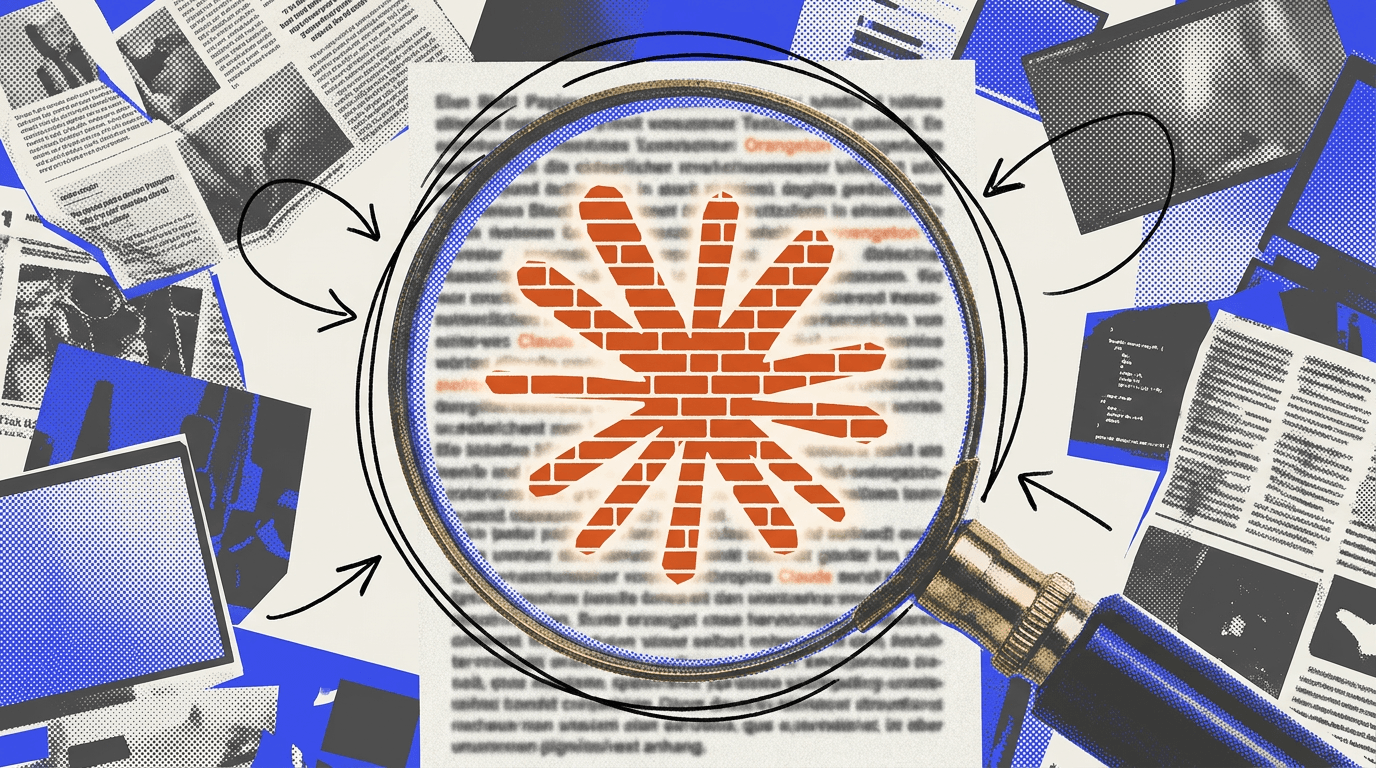
Anthropic is expanding the Claude watermark for text to four more Claude models: Claude Mythos 5, Claude Opus 4.7, Claude Opus 4.6 and Claude Sonnet 4.6. The company cites the EU AI Act deadline in December 2026, and the mark on two of the four models depends on sampling settings staying at their defaults.
- Anthropic is watermarking Claude Mythos 5, Opus 4.7, Opus 4.6 and Sonnet 4.6. Customers cannot turn it off.
- On Sonnet 4.6 and Opus 4.6, the mark applies only when temperature, top_p and top_k stay at defaults.
- The watermark is a pattern in word choice, based on a variant of Google DeepMind’s SynthID text method.
- Detection is in private preview. Anthropic says a detected mark is not fully conclusive, and a missing mark does not mean content was not AI-generated.
- The EU AI Act deadline in December 2026 is the reason Anthropic gives for marking older models now.
Four more Claude models get the watermark
According to an email to API customers, reported by The Decoder, Anthropic will watermark Claude Mythos 5, Claude Opus 4.7, Claude Opus 4.6 and Claude Sonnet 4.6. Newer models such as Claude Opus 5.5 already carry the mark.
Customers cannot turn the Claude watermark off. The rollout on Amazon Bedrock may take a few extra days, according to the same email.
Because the watermark is embedded at the model level, it works on every platform that hosts these models, including Amazon Web Services, Google Cloud and Microsoft Foundry, according to The Decoder and Anthropic’s help documentation.
Anthropic’s support page says its marks apply across Claude Platform (API), the Claude chat app at claude.ai, Claude Code, Claude Cowork and Claude Tag, and wherever Claude is offered, worldwide.
Opus 4.6 and Sonnet 4.6 are marked only at default settings
On these two models, the watermark applies only when temperature, top_p and top_k are left at their default values. These sampling parameters control how much randomness the model uses when picking words.
A minor tweak to any one of the three is enough to dodge the watermark on those two models, The Decoder reports. Anthropic’s email directly addresses customers who depend on the mark: “If you rely on the watermark for your own compliance, keep these settings at their defaults.”
Where the caveat does not appear
The email does not mention this caveat for Claude Mythos 5 or Claude Opus 4.7. Per The Decoder, those two models are covered without the default-settings condition, while the condition applies to the two older models.
Anthropic’s support list of supported models does not specify sampling conditions for any model. The two sources therefore differ in detail: the email states the condition for two models, and the support page is silent on it.
Why the older writing model matters
The Decoder notes that Opus 4.6 remains Anthropic’s best writing model, ahead of Opus 5.5. That makes the loophole relevant for the kind of work where people are most likely to tune sampling settings for text output. For teams that generate content through the API and adjust those settings, the practical result is that output from these two models may carry no mark.
How the word-choice watermark works
A watermark in this context is an imperceptible pattern in word choice that marks text as Claude-generated, according to Anthropic. The company says it does not change meaning, quality or readability.
The Claude watermark is a variant of Google DeepMind’s SynthID text method. SynthID is Google DeepMind’s watermarking system that embeds detectable patterns in AI-generated content. The text version tweaks the randomness behind word selection to create a statistically detectable pattern.
Per Grippi Media, Anthropic’s watermark is designed to live in its word choices, with a key nudging the model toward one of several similar-meaning words.
What the mark does and does not carry
Anthropic says the watermark adds no extra characters or tokens, does not affect pricing or request and response formats, and barely affects output speed.
The company also states that the mark “contains no information about the user, their organization, or their conversations with Claude.” It signals only that the text came from Claude.
Anthropic’s help center lists Claude Code and the Claude Platform API among the surfaces where its marks apply. Because the watermark is embedded at the model level and works through word selection, code that these models generate passes through the same process as prose, and none of the cited materials carve code out. They also do not describe how detectable the pattern is in code specifically. Anthropic does say that very short passages may not show a mark, so a brief snippet or a one-line fix is unlikely to settle anything on its own.
Why sampling settings matter
Anthropic’s materials as cited tie the watermark to the model’s word selection, and the condition on the two older models is that temperature, top_p and top_k stay at their defaults. The cited materials do not spell out the mechanism beyond that requirement.
Detection, persistence and what a mark can prove
Anthropic offers detection only in a limited way for now. It does not say a result settles who wrote a text, in either direction.
Detector access
Watermark detection is in private preview for eligible organizations, namely regulators, law enforcement, media, fact-checkers, independent researchers, educational organizations and EU civil society groups. Enterprises obliged to verify watermarking for their own compliance are also eligible.
Anthropic has a detection API in private preview and a registration form for detector access. The company says it will share more detailed technical guidance and expand detection API access over time.
What a result means
Anthropic says a detected mark is not fully conclusive. Claude may not be the original author, since people use it to proofread, translate or summarize.
The reverse also holds. A missing mark does not mean content was not AI-generated, for example for models released before marking support, heavily edited text, very short passages or stripped metadata.
Removal and editing
Anthropic’s own documentation says the Claude watermark may persist through some editing and travels with copied and pasted text. Grippi Media says it can be removed by heavily rewriting Claude’s output, while light edits will not remove it.
None of the sources provided describe a specific removal tool, and none address whether third-party plagiarism or AI-detection services such as Turnitin can read the mark. Detection is described only through Anthropic’s own private-preview API.
What it means for API customers, writers and law firms
For API customers on Sonnet 4.6 or Opus 4.6, whether output is marked depends on the default-settings condition. Anyone relying on the mark for compliance is told by Anthropic to leave the three parameters alone.
Reaction has been mixed. Grippi Media reports the move is polarizing, with some users canceling Claude subscriptions in protest.
John Gruber argues that no two synonyms mean exactly the same thing, so choosing words by a watermark key degrades precision, according to The Decoder. Anthropic says the pattern does not change meaning, quality or readability.
Artificial Lawyer, as summarized by The Decoder, raises concerns for law firms. Clients who banned AI use could discover the mark, and multiple watermarks in one document could cause complications.
The EU AI Act deadline and the legal backdrop
Anthropic has signed the EU AI Act Article 50(2) Code of Practice on Transparency of AI-Generated Content. Claude models launched in the EU on or after August 2, 2026 support machine-readable marking at launch.
The law includes a transition period for AI systems launched before August 2, 2026. The sources do not say which launch dates place Opus 4.6, Opus 4.7, Sonnet 4.6 and Mythos 5 under that transition period.
Anthropic gives the EU AI Act watermark deadline in December 2026 as the reason for marking older models now, per The Decoder.
How it compares with C2PA, SynthID and OpenAI’s textGrain
Text marking is separate from Anthropic’s file-based approach. C2PA, the Coalition for Content Provenance and Authenticity, is an open standard for recording information about content provenance, attached as Content Credentials.
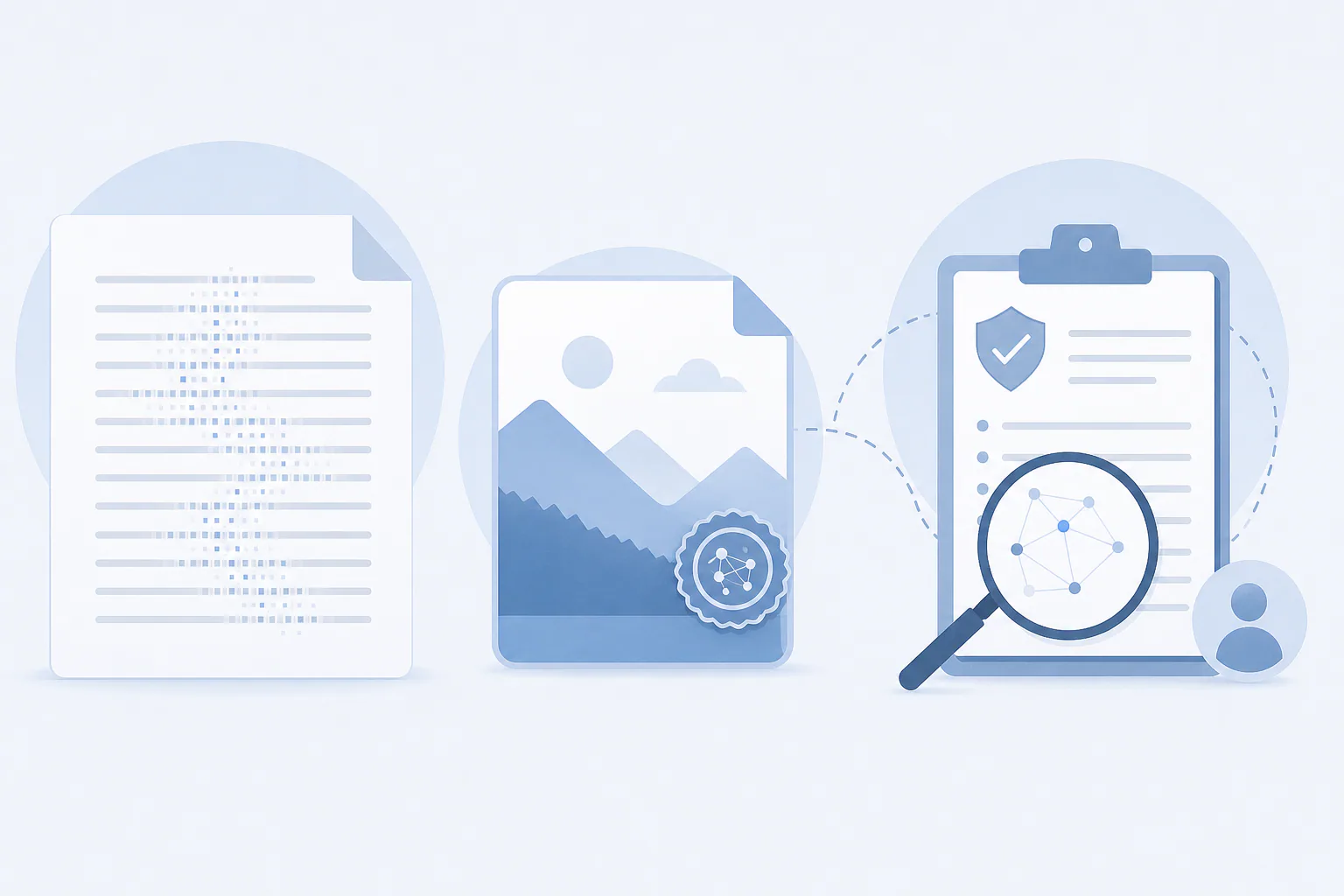
Content Credentials are attached to generated files such as PNG or JPEG where supported. Anthropic already uses C2PA for images, per Grippi Media, and offers a free Claude Content Checker for checking whether a file contains a Claude-issued Content Credential.
Google DeepMind introduced SynthID in 2023 as a watermarking system for images and expanded it to text in 2024. It open-sourced SynthID for text and built it into Gemini models, and that open text method is the base for Anthropic’s SynthID variant in Claude.
OpenAI launched its own text watermarking system, textGrain, in October 2026. It is active by default only for ChatGPT and Codex users in the EU.
Models still unmarked and what comes next
Anthropic’s support list shows that Claude Fable 5, Claude Mythos 5.1, Claude Opus 4.8, Claude Opus 4.5, Claude Sonnet 5.5, Claude Sonnet 5, Claude Sonnet 4.5, Claude Haiku 5.5 and Claude Haiku 4.5 are not yet marked.
Claude Opus 4.5 on this list is an older model than Claude Opus 5.5, which already carries the mark, so the two mentions do not conflict. To check a specific model, open Anthropic’s support page on how Claude marks AI-generated content and look for its exact version number in the list of supported models before you rely on the Claude watermark for compliance. Model names often differ by a single digit, so match the full name, and for Sonnet 4.6 or Opus 4.6 also keep temperature, top_p and top_k at their defaults.
Sources
Photo by The Decoder
Frequently asked questions
Can the Claude watermark be removed?
Can the Claude watermark be removed?
Grippi Media says heavily rewriting Claude’s output can remove it, while light edits will not. Anthropic says it may persist through some editing and travels with copied text.
Is there a Claude watermark detector?
Is there a Claude watermark detector?
Anthropic has a detection API in private preview, with a registration form for access. It is aimed at eligible organizations such as regulators, media, researchers and enterprises obliged to verify watermarking.
Which Claude models carry the text watermark?
Which Claude models carry the text watermark?
Claude Mythos 5, Opus 4.7, Opus 4.6 and Sonnet 4.6 are being added, and newer models such as Opus 5.5 already carry it. Several others, including Sonnet 5 and Haiku 4.5, are not yet marked.
Does changing temperature, top_p or top_k avoid the watermark?
Does changing temperature, top_p or top_k avoid the watermark?
On Opus 4.6 and Sonnet 4.6, yes: a minor tweak to any one of the three avoids it, according to The Decoder. The email does not mention this caveat for Mythos 5 or Opus 4.7.
Does the watermark identify me or my conversations?
Does the watermark identify me or my conversations?
No. Anthropic says it contains no information about the user, their organization or their conversations with Claude.
Does a detected watermark prove Claude wrote the text?
Does a detected watermark prove Claude wrote the text?
Not fully. Anthropic says Claude may not be the original author, since people use it to proofread, translate or summarize.