OpenAI is acquiring Pierre Computer Company, Inc., the startup behind Code Storage and several open-source developer tools whose libraries already power the Codex coding agent. The deal still needs regulatory approval before it can close.
- OpenAI is buying Pierre Computer Company, the maker of Code Storage and several open-source developer tools.
- Pierre’s libraries already power Codex, OpenAI’s coding agent.
- OpenAI says the goal is better Git workflows when developers and AI agents write code side by side.
- Pierre’s open-source projects will stay open source.
- Regulators still have to approve the deal before it can close.
OpenAI acquiring Pierre, the startup behind Code Storage
OpenAI is buying Pierre Computer Company, Inc., a deal first reported by Axios. Pierre built Code Storage, a product for storing code, along with a set of open-source tools aimed at developers.
The two companies are not strangers. Pierre’s libraries already run inside Codex, OpenAI’s coding agent, so OpenAI acquiring Pierre formalizes a dependency that exists today rather than adding a new technology to the stack. In practical terms, a component that OpenAI’s product relies on would move from an outside supplier to in-house ownership.
One commitment is spelled out for those who use or build on Pierre’s work: its open-source projects will stay open source. That matters because open-source libraries are often embedded in other people’s software, and a change of owner can raise questions about their future. The announcement does not describe any change to how the projects are licensed or maintained, and no further detail on governance has been given.
The transaction is not finished. It is awaiting regulatory approval, and until that is granted the two companies remain separate. Nothing in the available facts indicates how long that process will take.
The facts also leave out several items that are usually part of an acquisition story. No purchase price has been disclosed, and there is no statement on whether Pierre’s staff will move to OpenAI. Those points are covered in the final section as open questions.
Why OpenAI says Git workflows are the target
OpenAI describes the acquisition as being about Git workflows. The company wants those workflows to work better when developers and AI agents write code side by side in the same projects.
That framing points to a change in who touches a codebase. Version control was designed around people making changes in sequence or in coordinated branches, with each change recorded and reviewed. When an AI agent contributes as well, the history, the changes under review and the files being navigated all involve a second kind of author.
OpenAI also makes a point about scale. As agents handle more tasks in parallel, the company says, the tooling around Git has to keep up. Several agents working at once can produce more changes to store, display and review than a single developer typing in an editor, and each of those changes still has to be understood by a person before it is accepted.
The stated rationale connects directly to what Pierre builds. Its products cover storing code with history, navigating files, showing changes and coloring code as it appears. Each is a step that people and agents both pass through when they work in a repository.
The rationale stays at the level of workflow. OpenAI has not detailed which specific Git features it plans to change, and the facts available do not include a product roadmap or a timeline for any new capability.
How the deal looks next to GitHub
Outside observers read OpenAI acquiring Pierre against one clear competitor, GitHub. The Microsoft-owned platform is where most developers host their Git repositories today, and many coding tools connect to it. Some reports frame the deal as a direct challenge to that position, with OpenAI moving toward the hosting role for code that AI agents write.
OpenAI has not described the deal in those terms, and nothing in the announcement says Codex users will be asked to leave GitHub. Still, owning Code Storage alongside Pando would give the company its own place to keep agent-written code and its history. With Trees, Diffs and Highlights added, OpenAI’s Git tools would cover storage, navigation and review without depending on an outside platform.
What Pierre’s tools do
Pierre’s products cover the storage, navigation, review and display of code. Together they make up a small stack for the point where a developer or an agent looks at and changes a project.
Code Storage
Code Storage is the Pierre product the announcement names first. It stores code and tracks history through Git, the version control system that records how a project changes over time. Pierre built it as API-first Git hosting for software that writes code, not only for people pushing commits.
Tracking history means that every change can be traced and compared with earlier states of the project. For a workflow in which an agent edits files, that record is what lets a developer see what the agent did and when.
App builders such as Lovable, Bolt and Amp use Code Storage to keep the code their products generate, along with the files their agents work from. Those customers show that the product already serves machine-driven workflows, the same kind of work OpenAI is acquiring Pierre to support in Codex.
Trees, Diffs and Highlights
Three open-source tools sit alongside Code Storage, each with a narrow job:
| Tool | What it does |
|---|---|
| Trees | Handles fast navigation of a project’s files |
| Diffs | Displays code changes and lets users fix bugs right in the diff view |
| Highlights | Real-time syntax highlighter that works as developers type or as an AI agent generates code |
A diff is the view that shows what was added and removed between two versions of a file. Being able to fix a bug directly in that view means a reviewer does not have to leave the screen where the problem was spotted.
The detail on Highlights is the most telling. It is built to work on code that appears as an agent produces it, not only on code a person types into a file. That is the side-by-side situation OpenAI cites as the reason for the deal.
The facts do not say how these tools are distributed, what they cost or which of them Codex uses most.
Key terms behind the deal
Git is a version control system that tracks the history of code. Code Storage uses it to store code and keep that history, which is why the case for OpenAI acquiring Pierre is framed around Git workflows.
A coding agent is an AI tool that works on coding tasks inside a project, such as reading, modifying and running code. Codex is OpenAI’s example, and it is the product that Pierre’s libraries already support.
A syntax highlighter colors code according to its structure so it is easier to read. Keywords, strings and comments each get a different color, which helps a reviewer scan a change quickly. In Pierre’s case, Highlights does this live, while code is being typed or generated.
Two further terms appear in descriptions of Codex. A repository is the place where a project’s code and history are kept. A sandbox is an isolated environment, so work done inside it runs apart from the rest of a system.
How Codex fits in and who it serves
Codex is OpenAI’s coding agent. It can read, modify and run code, and it can work in its own sandboxed environment connected to a repository.
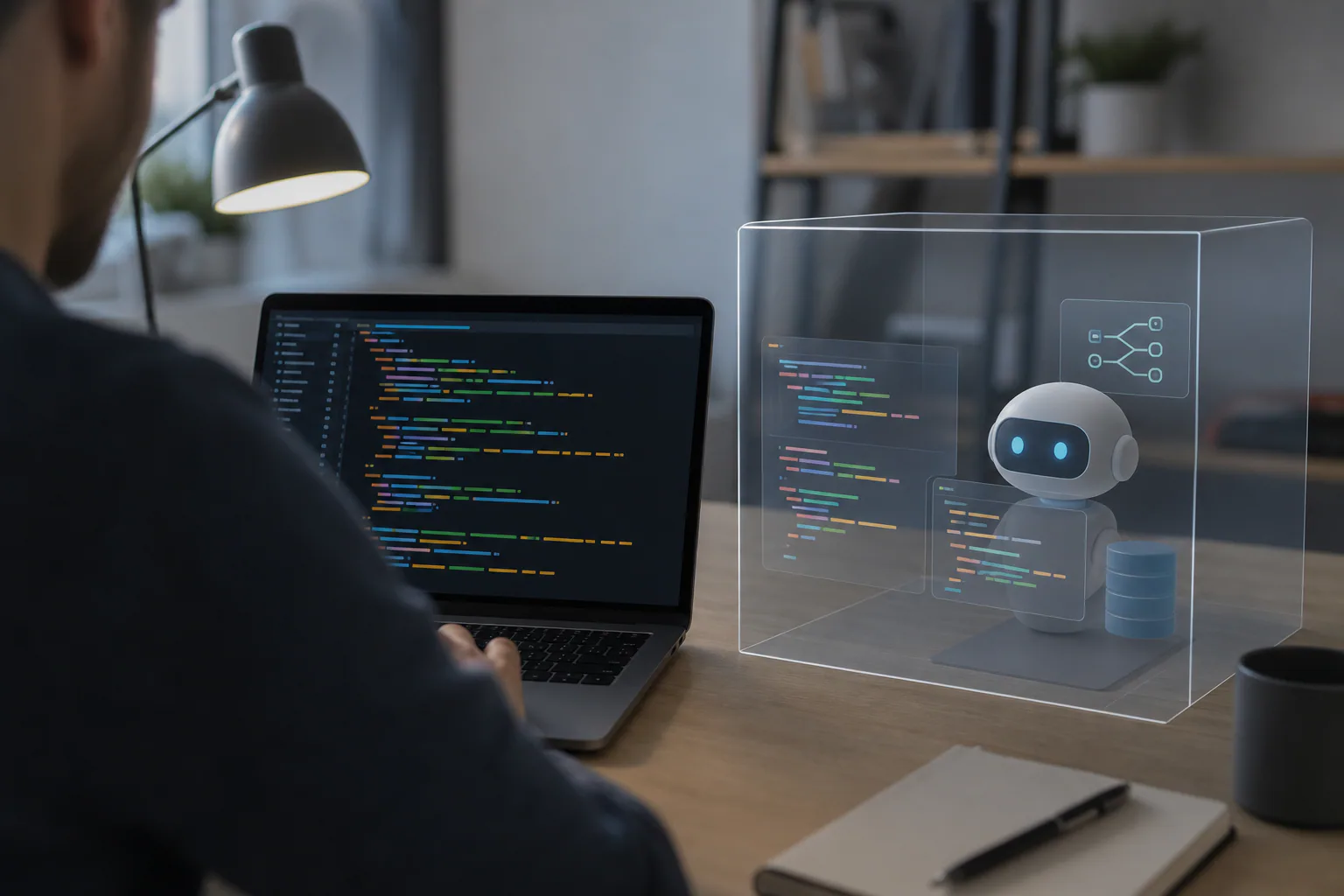
That description answers a frequent search question about what the Codex agent is. It is not a text editor or a code-completion box. It is a tool that takes on a task inside a project, makes changes and can run the result.
Codex can be used in two broad ways. One is a cloud workflow connected to a repository. The other is local use, through the CLI (command-line interface), an IDE extension or the Codex app. An IDE extension runs inside a developer’s code editor, while the CLI works from a terminal.
Codex therefore runs in one of two places, either in the cloud, tied to a repository, or on a developer’s own machine through one of three local routes. The mention of the Codex app also answers a common question about whether an app still exists, since it is listed as one of the local ways to use the agent.
What the deal means for Codex users
Pierre’s tools are already part of that app experience. Trees handles file browsing inside the Codex app, and Diffs drives the view where users review the changes the agent proposes. For Codex users, the deal concerns tools they already rely on every time they check what the agent changed, not a future add-on, which is why its outcome matters to them even before regulators decide.
Windows downloads, pricing and specific commands fall outside the available facts, so those details are not addressed here.
Developers and teams whose work flows through Codex have the most at stake in this deal. Pierre’s libraries sit under the agent’s handling of code, files and changes, so OpenAI acquiring Pierre ties that layer more closely to the product. Teams that build their own projects on Pierre’s open-source tools have the separate assurance that those tools remain open source.
How the deal compares with OpenAI’s earlier infrastructure moves
OpenAI already runs Pando, its own version control backend built for both developers and agents. OpenAI acquiring Pierre therefore lands the company in an area where it has already built something itself, which makes the relationship between the two an open question.
An earlier purchase shows a similar pattern of buying infrastructure. In June 2024, OpenAI acquired data analytics startup Rockset to power its retrieval infrastructure, and it hired at least some of Rockset’s employees.
| Item | Area | What the facts say |
|---|---|---|
| Pando | Version control backend | Built by OpenAI for developers and agents; already in operation |
| Rockset | Retrieval infrastructure | Data analytics startup acquired in June 2024; at least some employees hired |
| Pierre | Code storage and developer tools | Deal announced; regulatory approval pending |
The deals differ in subject. Rockset concerned retrieval, meaning how systems find the data they need. Pierre concerns the storage, display and navigation of code. Both involve plumbing under OpenAI’s products rather than a new consumer feature.
Whether Pierre’s team will join OpenAI the way Rockset staff did is not stated in the available facts.
What happens next
For OpenAI acquiring Pierre to close, regulators must first give their approval. Until then it is an agreement rather than a completed deal, and Pierre continues as a separate company.
Several points remain open:
- The purchase price has not been given.
- No closing date has been announced.
- It is unclear how Pierre’s tools will sit alongside Pando, OpenAI’s existing version control backend.
- It is not stated whether Pierre’s employees will join OpenAI.
The one firm commitment on the table is that Pierre’s open-source projects will stay open source. For Codex users, no change in how the agent is accessed has been announced, and the cloud, CLI, IDE extension and Codex app routes are described as they stand today.
Sources
Frequently asked questions
What is Pierre Computer Company?
What is Pierre Computer Company?
Pierre Computer Company, Inc. is the startup behind Code Storage and several open-source developer tools. Its libraries already power OpenAI’s coding agent Codex.
What is the Codex agent?
What is the Codex agent?
Codex is OpenAI’s coding agent. It can read, modify and run code, and can work in its own sandboxed environment connected to a repository.
How can Codex be used?
How can Codex be used?
Codex can be used through a cloud workflow connected to a repository, or locally through the CLI, an IDE extension or the Codex app.
Will Pierre’s tools stay open source?
Will Pierre’s tools stay open source?
Yes. The announcement says Pierre’s open-source projects will stay open source.
Has the OpenAI acquisition of Pierre closed?
Has the OpenAI acquisition of Pierre closed?
No. The deal must receive regulatory approval before it can close.
What is a coding agent?
What is a coding agent?
A coding agent is an AI tool that works on coding tasks inside a project, such as reading, modifying and running code.