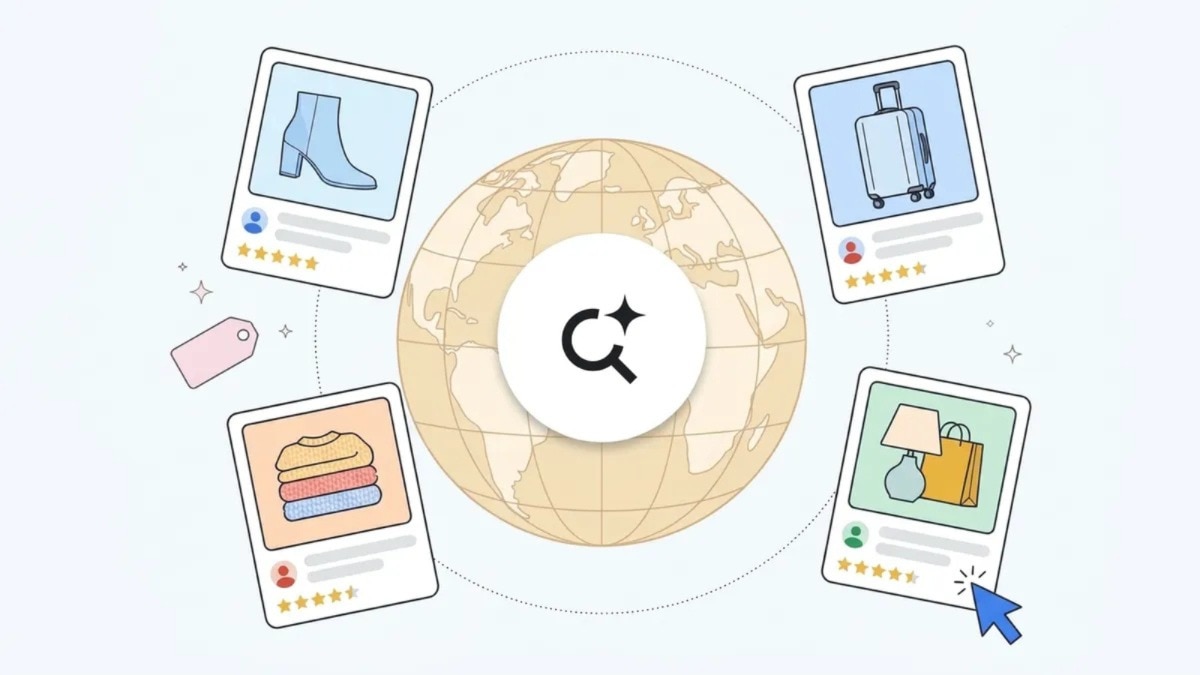
Google is bringing advertisements into its AI search answers in India and nine other countries, according to India Today. The ads will appear next to or inside conversational AI responses, which adds a paid placement to the format people use for longer, more detailed questions.
- Google is putting ads into AI Mode answers across ten countries, India among them. The rollout starts in Q4.
- Every ad carries a clear “Sponsored” label, and Google says ads will not influence the AI-written text.
- Advertisers need no extra budget or new campaigns, because Google pulls from existing ad setups.
- The UK, Mexico and Brazil follow later in Q4 2026, while the US gets the more advanced multi-turn ads.
- Google says AI Mode queries run three times longer than traditional searches and sponsored AI links get clicked as often as regular product listings.
Google is adding ads to AI Mode answers in India and nine other markets
Google is officially bringing ads into its AI search answers across ten countries, widening Google AI search ads beyond the AI Overviews summaries where they already run in some markets. Besides India, the countries are Australia, Canada, Kenya, Malaysia, New Zealand, Nigeria, Pakistan, the Philippines and Singapore.
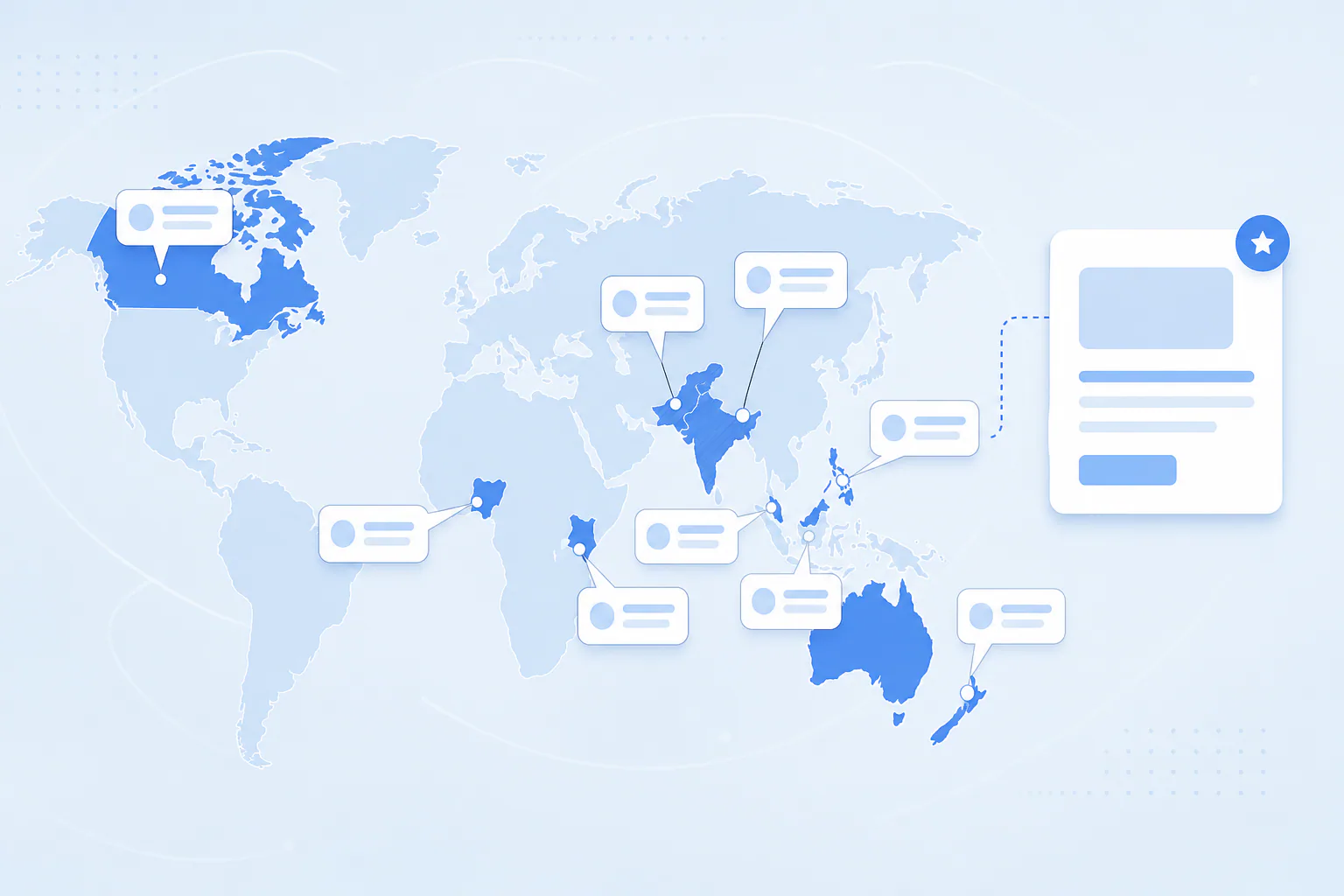
Pakistan is the one market with a restriction. Ads there are limited to text ads. The reporting attaches no such limit to the other markets on the list.
The change starts in the fourth quarter. A user who asks a complex question and receives a conversational AI answer will see related ads beside or within the response.
Who confirmed it
Dan Taylor, Vice President of Global Ads at Google, confirmed the worldwide expansion in a post on X. He wrote:
“As Search becomes more conversational, our research shows that people are comfortable with ads in AI Mode and find them highly relevant. We’re excited to expand this high-value experience to more countries in Q4.”
Taylor’s statement rests on two claims: that users are comfortable with the ads and that they find them relevant. The research behind both is Google’s own, and the reporting does not describe how it was conducted or which users were surveyed.
His wording, “more countries”, also indicates that the experience already exists elsewhere. The facts available name the US as the market with the more advanced version, but they do not set out the full history of the format.
How ads in AI answers work and what the terms mean
AI Mode is Google’s conversational search experience. It gives generated answers and supports follow-up questions, so a search can continue as a dialogue instead of ending with a list of links.
Ads in this format are tied to that dialogue. They appear beside or inside the generated response, and they are shown when a question is complex enough to produce a conversational answer. A short, simple query that does not lead to such an answer falls outside the description Google has given.
What the Sponsored label and the neutrality pledge cover
All of these ads will carry a clear “Sponsored” label. The label is the visible marker that separates a paid link from the generated answer around it.
Google also confirmed that paid ads will not change or influence the AI-generated text. According to the company, answers remain neutral, and sponsored links appear alongside them. The pledge concerns the wording of the answer, not whether ads are present: the answer is described as unaffected, while the ads are described as an addition placed around it.
Nothing in the reporting explains how that separation is checked or who verifies it. No outside audit has been cited, so the commitment remains a company statement.
Privacy rules around the feature are a separate matter, covered in an earlier report on the AI Mode ads privacy changes.
What multi-turn ads are
Multi-turn ads are ads shown during a back-and-forth chat with AI search. They aim to match products while users compare options, so the ad shown can shift as the conversation narrows from a broad question to a specific choice.
This is the more advanced version of the format. Google is introducing it in the US, and the sources do not say it is part of the rollout to the ten initial markets.
Before this rollout, Google tested several formats in AI Mode. Sponsored listings sit in or below the answer, much like standard Search and Shopping ads. Conversational discovery ads suggest products or services while a user is still exploring a topic, and Direct Offers present a deal, such as a discount, when purchase intent is high. Multi-turn ads differ because they follow the whole conversation and can change as it narrows, whereas the other Sponsored AI Mode ads respond to a single question.
How existing ad setups are used
Google will automatically pull from advertisers’ existing ad setups to fill the new placements. The ads in AI answers are therefore not described as a separate product with its own configuration step. What an advertiser has already built is the raw material, and Google decides when it fits an AI answer.
There is no separate AI Mode campaign in Google Ads. Eligible Search, Shopping and Performance Max campaigns serve the new placements, so existing Search ads and Shopping ads can appear in AI Mode answers without changes. Turning on AI Max widens matching to more queries, but it does not let advertisers pick AI Mode as a placement.
Advertisers also cannot choose or exclude AI Mode placements directly. The levers that remain are the familiar ones. Negative keywords keep ads away from unwanted queries, and brand exclusions limit which brand searches an ad can match.
What it means for advertisers and users
For advertisers, the main points are cost and effort. They will not need to spend extra money or build new campaigns to appear in AI answers. Accounts that already run ads are the ones Google will draw on, so eligibility follows from what exists today rather than from a new sign-up.
One consequence is plain. Because no new campaign is required, advertisers in the ten markets may find their ads shown in a place they did not choose by name. Coverage of the launch indicates that they cannot opt out of AI Mode placements directly, so negative keywords and brand exclusions are the main controls left.
The two figures Google cites
Google offers two numbers to explain why the format matters. First, it says queries in AI Mode are on average three times longer than traditional Google searches. A longer query usually carries more detail about what a person wants, which is the context for more specific ad matching.
Second, Google says users click sponsored AI links as often as regular product listings. That puts the new placements on par with an established ad type, at least by Google’s account.
Both figures are Google’s own claims, relayed by India Today. They are reported as company statements, not measured by an independent party. The reporting does not say how the click comparison was calculated, which products or markets it covers, or over what period. For anyone budgeting on the basis of these numbers, they work as a claim from the seller of the ad space, not as a verified benchmark.
For people using AI Mode
Users in the listed countries will start seeing labeled ads when they ask complex questions. The answers are said to stay neutral, with sponsored links alongside, so the visible difference is the presence of clearly marked paid links in the answer area.
The “Sponsored” label is the only safeguard the reporting describes for telling the two apart. Users in Pakistan will see text ads only, so their experience differs from that of users in the other nine markets.
For SEO and content teams
A paid layer inside AI answers adds one more element to a surface where generated text already competes with traditional results. The reporting says nothing about how these ads affect clicks on organic links, so that effect is not known yet, and Google has not published figures on it.
Teams that report on search performance will have two kinds of numbers to keep apart: what Google measures in its own tools and what Google states in announcements. The three-times-longer-queries and equal-click claims belong to the second group until independent data appears.
Measurement is the other practical limit. Advertisers have little ability to isolate AI Mode ad performance in their reports, because the placements are blended into the campaigns that serve them. On the organic side, clicks that come from AI Mode often show up as Direct or Unknown traffic in analytics, which makes the channel easy to undercount. Teams that want a rough picture can mark the rollout date in their dashboards and watch for shifts in those buckets.
How AI Mode reached India and how it works
Google AI Mode launched in India on July 8, 2025, with no sign-up needed, after first being tested in the US. According to Digital4design, the launch followed a period in which AI Overviews and AI search features were limited to users who opted into Search Labs.
That sequence matters for the ad rollout. Opt-in testing came first, then a general launch without sign-up, and now a paid layer for markets where AI Mode is part of everyday search. The ads arrive roughly fifteen months after the Indian launch, a gap that follows from the two dates in the sources.
Where AI Mode sits in Search
The feature appears as an “AI” tab next to “All”, “News” and “Images” in Google Search, on both mobile and desktop. It sits inside the regular search page rather than in a separate app.
Inputs and model
AI Mode supports follow-up questions, voice input, text input and image input via Google Lens. Google Lens is the tool that lets people search with a photo instead of words.
The range of inputs means a conversation can begin with a spoken question or a picture and continue in text. Google says AI Mode is built on its Gemini 2.5 model.
Why the Indian market is large
The Digital4design page puts India’s internet users at more than 750 million. That is the scale at stake for any paid format introduced there. The sources do not say how many of those users use AI Mode, so the size of the audience that will see the ads is not known.
Rollout timeline and what comes next
Ads in AI answers roll out now to the initial countries: India, Australia, Canada, Kenya, Malaysia, New Zealand, Nigeria, Pakistan, the Philippines and Singapore. Pakistan receives text ads only.
Google plans to extend the update to users in the UK, Mexico and Brazil later in Q4 2026. No exact dates have been given for those three markets.
Multi-turn ads are available in the US only, per the India Today report. Google has not said whether or when they will reach other markets.
The rollout builds on earlier steps. Google first tested ads in AI Mode in the US on desktop and mobile, and Google ads in AI Overviews reached India before this expansion, so advertisers there are already familiar with paid placements attached to generated answers. AI Overviews are the short summaries at the top of a results page, while AI Mode is the full conversation.
| Group | Markets | Timing |
|---|---|---|
| Initial rollout | India, Australia, Canada, Kenya, Malaysia, New Zealand, Nigeria, Pakistan (text ads only), the Philippines, Singapore | Rolling out now, starting in Q4 |
| Next markets | UK, Mexico, Brazil | Later in Q4 2026 |
| Multi-turn ads | US | Available in the US only |
Open questions remain. The sources do not give dates for the three later markets, a timeline for multi-turn ads outside the US, or independent data on how the ads perform.
Sources
Photo: India Today
Frequently asked questions
Which countries are getting ads in AI Mode?
Which countries are getting ads in AI Mode?
India, Australia, Canada, Kenya, Malaysia, New Zealand, Nigeria, Pakistan (text ads only), the Philippines and Singapore. The UK, Mexico and Brazil follow later.
Will ads change what Google’s AI Mode answers say?
Will ads change what Google’s AI Mode answers say?
Google says no. It confirmed that paid ads will not change or influence the AI-generated text, and that sponsored links appear alongside neutral answers.
How will I know an AI Mode result is an ad?
How will I know an AI Mode result is an ad?
Every ad will carry a clear “Sponsored” label.
Do advertisers have to pay extra or build new campaigns?
Do advertisers have to pay extra or build new campaigns?
No. Advertisers will not need extra spend or new campaigns, because Google will automatically pull from their existing ad setups.
What are multi-turn ads and where are they available?
What are multi-turn ads and where are they available?
They are ads shown during a back-and-forth chat with AI search, aiming to match products while users compare options. They are available in the US only.
When do the UK, Mexico and Brazil get ads in AI answers?
When do the UK, Mexico and Brazil get ads in AI answers?
Google plans to expand the update to those three countries later in Q4 2026. No more precise date has been given.